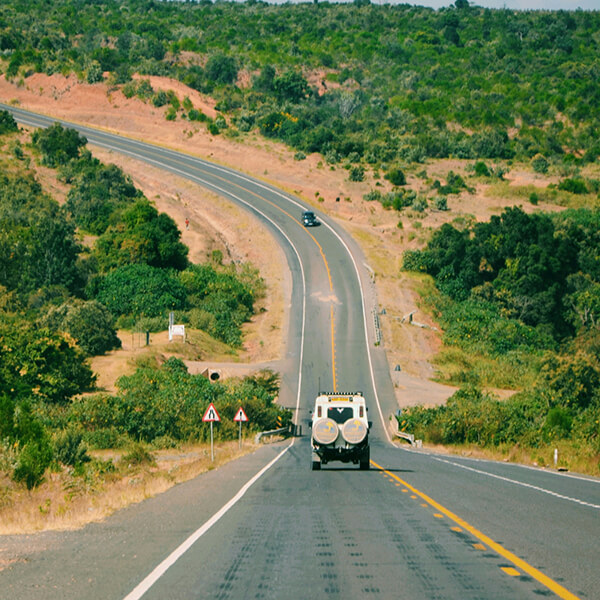
Namibia does not offer one kind of road trip.
It offers cool Atlantic fog and inland heat. Gravel roads that demand patience and tar that runs straight towards the horizon. Early-morning wildlife, late-afternoon light and towns where stopping for fuel turns into lunch.
November makes those contrasts even sharper. Summer is settling in and the short rainy season is reaching its final month, while the coast remains cooler under the influence of the Benguela Current. Namibia’s climate changes noticeably as you move across the country.
The question is not simply where you want to go. It is what kind of road you feel like taking. Start with the mood, then build the route, overnight stops and rental around it.
Choose the coast when the inland heat has had enough of your attention.
The drive west changes slowly, then all at once. The colour drains from the landscape, the temperature drops and fog begins softening the road ahead. Swakopmund and Walvis Bay offer that rare Namibian combination of desert on one side and cold ocean on the other.
This is the route for long walks, fresh seafood, lagoon birdlife and opening a jacket you could not imagine needing when you packed it in Windhoek. The Western Coastal Region is particularly welcome when November heats up inland. Stay for a night or two rather than treating the coast as a photograph and turning around.
Choose the north or central regions if you want to see the landscape beginning to change.
The first rain does not turn Namibia green overnight, but it changes the mood. Clouds gather. Dust settles. The air smells different. Migrant birds begin adding movement and colour around wetlands, waterholes and river systems.
November marks the beginning of one of Namibia’s best birding periods, with migrant species arriving and breeding activity increasing.
Keep the route flexible. Check Namibia Roads Authority updates after heavy rain, obey closures and never drive through water covering the road. The rain is part of the spectacle, but it should never become a reason to take a chance.
Choose the desert when the camera is packed before the clothes.
November light can be hard and bright by midday, which makes the edges of the day more valuable. Leave early. Stop before the heat drains the pleasure from the drive. Let sunrise and late afternoon do the work.
This road trip is less about collecting attractions and more about watching shadows move across rock, sand and open ground. Carry more water than you expect to drink, keep fuel stops sensible and avoid turning a beautiful drive into a race against darkness.
A slower day often produces the photographs you remember.
Choose this road when the stops matter as much as the scenery.
Build the drive around bakeries, local restaurants, roadside stalls, markets and the person who tells you the better lunch is two streets away. Namibia’s towns give a long route rhythm. They are where you refuel, stretch, buy padkos and hear what the road ahead is doing.
Do not arrive with every minute allocated. The most memorable stop may be the one that was only supposed to take ten minutes. Leave space for a second coffee, a local recommendation or the road that looks more interesting than the original plan.
Once you know your mood, look honestly at the route.
Road surface, passengers, luggage and distance should guide the booking. Browse our Namibia rental fleet and tell us if the trip includes gravel or more remote sections.
Add every driver who may take a turn and check the latest road conditions before leaving. In Namibia, preparation does not take the adventure out of the drive. It gives you more freedom to enjoy it.
You can collect through our Windhoek and Walvis Bay locations, then let November decide which side of Namibia you want to meet.
Book your car rental in Namibia and choose the road that suits your mood.


